SHORT ANSWER
Woven cloth is built from interlaced yarns and often provides a serviceable, forgiving baseline. A laminate combines layers so selected fibers can resist selected loads with less stretch, but it introduces different questions about flexing, impact, film condition and repair.
Three checks before you act
- 01Name the boat, sail and use before naming the cloth.
- 02Separate shape stability from abrasion, UV exposure, handling and repair.
- 03Ask what the construction is designed to resist and how deterioration appears.
Construction matters more than the label
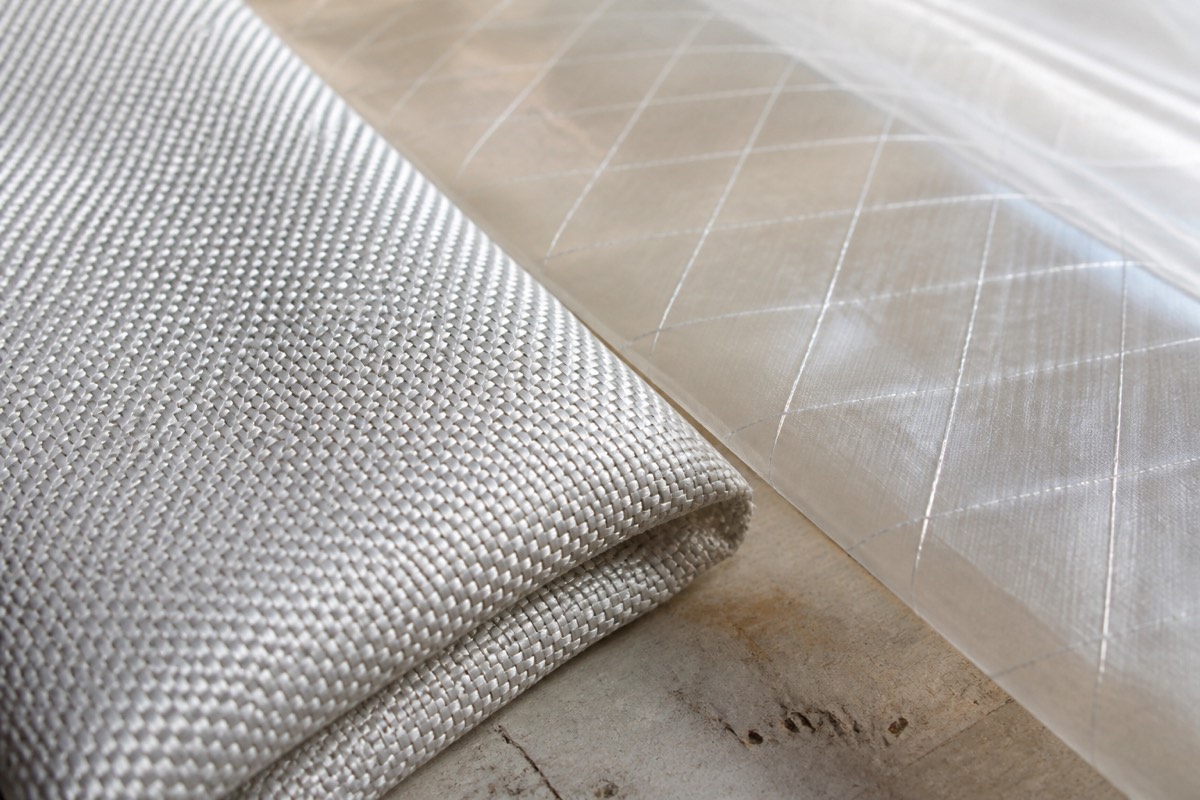
A woven sailcloth gains its structure from yarns crossing in two principal directions, then from the finish applied to the weave. The result is not automatically heavy, stretchy or old-fashioned. Yarn quality, weave balance, crimp, finish and the way the sailmaker aligns the cloth all affect the finished sail. Dimension-Polyant's woven ranges, for example, are separated by intended application rather than presented as one interchangeable polyester sheet. That is why the useful question is which woven construction, not simply whether the quote says Dacron.
A laminate is an assembly rather than a single film. Depending on the product, it may combine load-bearing fibers, films, scrims and protective outer layers. Fiber placement can be selected for the loads expected in a panel or an entire sail. That can support shape stability, but the word laminate does not disclose the fiber, adhesive system, exterior protection or repair route. Two laminated sails can therefore age and handle very differently even when their quoted weight looks similar.
Match the cloth to daily handling
Cruising use brings repeated hoists, reefs, folds, furling, chafe against rigging and long periods of sun exposure. A woven polyester construction is often chosen when robust handling and straightforward service matter strongly. A protected laminate may also suit cruising, especially when shape retention is a priority, but its value depends on how it is covered, stowed and supported at high-wear areas. Neither family excuses poor corner design, an abrasive spreader patch or a sail left flogging.
Racing changes the weighting of the same questions. Shape stability and controlled fiber direction may carry more importance, while the owner may accept more careful handling or a more specialized repair. Even then, the fastest-sounding material is not automatically the right one. Ask how many reefs the sail carries, whether it will be furled, how often it is delivered below, what surfaces it touches during a tack and whether a local loft can repair the chosen construction.
Inspect the failure mode you are buying
On woven cloth, inspection begins with changes in hand and geometry: unusual softness, permanent creases, distortion around seams, enlarged needle holes, worn surface fibers and a shape that no longer responds as expected to trim. On a laminate, add cloudy zones, bubbles, film cracks, localized separation and hard creases to the log. These observations are clues, not a home laboratory. Photograph the affected zone and the surrounding panel under the same light so a sailmaker can see both scale and location.
Make competing quotes comparable by giving each loft the same boat, rig, sail, use, reef plan, storage method and handling priorities. Ask for the cloth family, protective layers, corner and chafe treatment, expected inspection points and practical repair options. Do not ask for a guaranteed number of seasons without supplying a use pattern. A material decision becomes useful when it names the trade-off you accept and the evidence that would make you review it later.
BOUNDARY
A cloth family is not a finished sail
Load path, panel layout, reinforcement, stitching, hardware and fit can outweigh the family name printed on a quote. A damaged laminate, a distorted woven panel or any failing corner needs direct assessment; no comparison page can certify it for another hoist.
Connect material, cut and inspection
Use the cloth weight guide to decode a specification, then compare how panel orientation carries load. The wear diagnostic gives those material choices an inspection route after the sail enters service. The deck hardware corrosion checks keep the same habit once the fittings join the log. Cloth choice is only one part of keeping a record straight. The same habit of separating subjects applies on the water and at the desk, where doves and bobwhites sit alongside Nushagak sockeye counts and a routine for field notes and corrections. That page sets out three field methods and three separate calendars, so counts, cover and corrections do not blur into one another. A sailmaker reading it will recognise the principle: name the material, name the number, and keep each record in its own column. Cloth choice is one decision among many, and the same habit of matching material to task carries over to other working animals. A handler facing a first herding instinct test involve the same questions a sailmaker asks of a roll of cloth: what the dog is bred for, what the stock will do, and what the day actually demands. Age, equipment and the difference between sheep and ducks all shape the reading, just as weave and laminate behave differently under load. The page sets out that preparation step by step. Cloth choice is only one variable in a day on the water. The same attention to local conditions that decides between woven and laminate applies to any fishery, and the fieldbook keeps notes on other working grounds alongside sailcloth. Anglers heading to County Mayo can read a working guide to salmon and trout on the River Moy, covering techniques, the Ridge Pool in Ballina, beat access and travel without a car. The method is identical: read the water, match the gear, record what worked.
SOURCES AND DATE
Checked 25 August 2026. Manufacturer pages describe their own constructions; the comparison above separates those descriptions from the Fieldbook analysis.