SHORT ANSWER
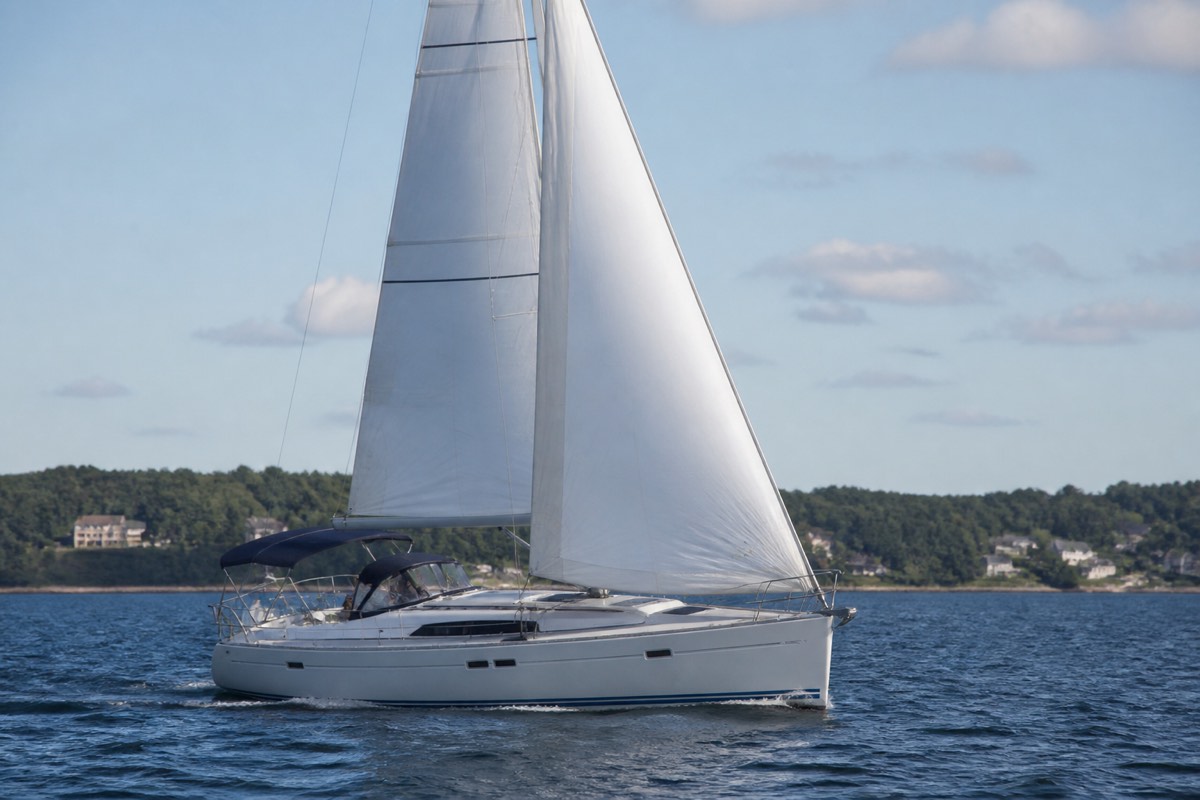
The mainsail works behind the mast and offers controls for leech, foot and draft as well as slab or furling reduction. A genoa works from the forestay and may overlap the mast. Choose which sail to adjust or reduce by watching balance, heel, helm, visibility, gear and the next maneuver.
Three checks before you act
- 01Describe point of sail, heel and helm before moving a control.
- 02Check how each reefing system changes shape as well as area.
- 03Keep the sail plan compatible with the actual forestay, boom and tracks.
Treat the two sails as one aerodynamic system
It is tempting to ask which sail provides more drive, but the answer changes with point of sail, rig proportions and trim. The main sets the after part of the plan and interacts with mast bend, sheet, traveler, vang, outhaul and luff tension. The genoa sets the forward part and depends on halyard or luff tension, sheet lead, forestay behavior and overlap. Air leaving the headsail meets the mainsail, so an adjustment to one can change the useful setting of the other.
Begin diagnosis with the boat rather than the control labels. Record true and apparent conditions if available, point of sail, sea state, heel, speed trend and helm feel. Look at luff telltales, leech behavior and whether the sails remain stable through a wave or gust. If the boat carries heavy helm, excessive heel or a repeatedly collapsing sail, capture the complete picture before tightening every line. One symptom can come from balance, trim, sea state or a stretched sail.
Compare handling before comparing area
The mainsail often offers staged reef points or an in-mast or in-boom reduction system, while a genoa may be changed, partially furled or replaced by a smaller headsail. Each method alters more than area. Reefing changes tack and clew positions, line loads and draft control. Partial furling changes the effective shape and sheet lead. A smaller working headsail can reduce overlap and foredeck burden, but only if the stay, halyard, track and attachment system suit it.
Plan the next maneuver while the present sail plan is still manageable. Ask who will ease, steer, handle halyards and confirm completion. Check that a reduced main does not leave loose reefing lines or an unsupported tack, and that a furled headsail is secured according to its system manual. If changing forward sails puts an underprepared crew on deck in deteriorating conditions, the theoretical performance advantage is irrelevant. Handling margin is part of sail selection, not a separate safety footnote.
Use repeatable observations to refine balance
For a controlled comparison, sail a stable course in a clear area and alter one variable. A small traveler change can separate mainsail angle from sheet tension; a headsail lead change can alter foot and leech together. Note the response, return to the starting mark, then test the next change. Marks on lines and tracks make the experiment reversible. A useful entry says what moved, by how much, under which sail plan and what the boat did afterward.
Persistent poor balance deserves a broader inspection. Check whether the sails can reach their designed corners, whether tracks and cars move freely, whether the luff or leech has changed shape and whether mast tune follows the maker's guidance. A replacement decision also needs dimensions, reef positions, hardware and expected use. The phrase mainsail versus genoa is therefore a doorway: the practical answer comes from how the pair fits this rig and how the crew can control it.
BOUNDARY
Balance is boat-specific
Do not prescribe a reef, furled percentage or sail change from this page alone. Current weather, sea room, rig instructions, sail condition and crew capability govern the decision. If steering load rises sharply or gear does not move normally, reduce load and investigate.
Link balance to wind and controls
Use the mainsail control map to isolate one adjustment, compare conditions with the wind range guide, and log the complete sail plan in the Sail Fit Matrix. Sail choice and insect timing share the same logic: both reward reading conditions before committing. A mainsail and a genoa divide the same wind by cut and area, just as a trout river divides its season by hatches. The McCloud and Upper Sacramento below Mount Shasta are worked the same way, with flow, clarity and temperature deciding where fish hold and what they take, and pocket water fished close without spooking. Anglers planning a self-guided two or three day stay can read which insects and flies matter month by month, then match access and camping to the water. Sail choice and trial scoring share a habit of mind: both reward reading conditions before committing. A mainsail and a genoa divide the same wind by area and shape, and the decision turns on what the boat must do next. The same logic runs through a gundog trial, where spaniel hunting tests and sheepdog nursery or open classes are judged on how a dog handles ground, stock and pressure. Neither page offers a rule of thumb; each sets out the terms, the scoring and the first season, so the reader can judge the work in front of them.
SOURCES AND DATE
Checked 25 August 2026. The RYA handbook index and Seldén technical library establish the trim, reefing and hardware topics; the observation sequence is Fieldbook analysis.