SHORT ANSWER
Each shape names one cause. A rut marks where load repeated along a single line; a berm stores leaned-over turning force and lends some of it back; whoops arrive as a frequency set by spacing, speed and suspension; a jump face converts the last metres of dirt into the shape of the flight. Water then rewrites all of them. Read the shape, name the cause, and only then decide what the line or the shovel should change.
For the same shapes read from the fence of a private track, the track-reading field notes log ruts, berms, whoops and watering passes in a dated series.
Three checks before you act
- 01Read the surface before riding it or grooming it.
- 02Match every shape to the force or frequency that produced it.
- 03Let water and drainage finish the diagnosis before changing a line.
Jump faces and the calls they force
Everything that happens in the air is decided in the last metres of dirt. A face read well gives one clean input: approach speed against lip angle. A face read badly offers a surprise that no body position repays. The practical call is simple arithmetic held loosely: steeper lips trade distance for height, faster approaches trade height for distance, and a rutted or soft run-in steals both before the bike leaves the ground.
Walk the face before riding it. Look for the rut that feeds the lip, the moisture line where the surface changes grip, and the mark where earlier wheels lost direction. A jump call made from the fence, on foot, costs nothing; the same call made at speed is a commitment. Note the landing as carefully as the lip, because a good takeoff onto a flat or occupied landing is still a bad trade.
Ruts and berms: where the load goes
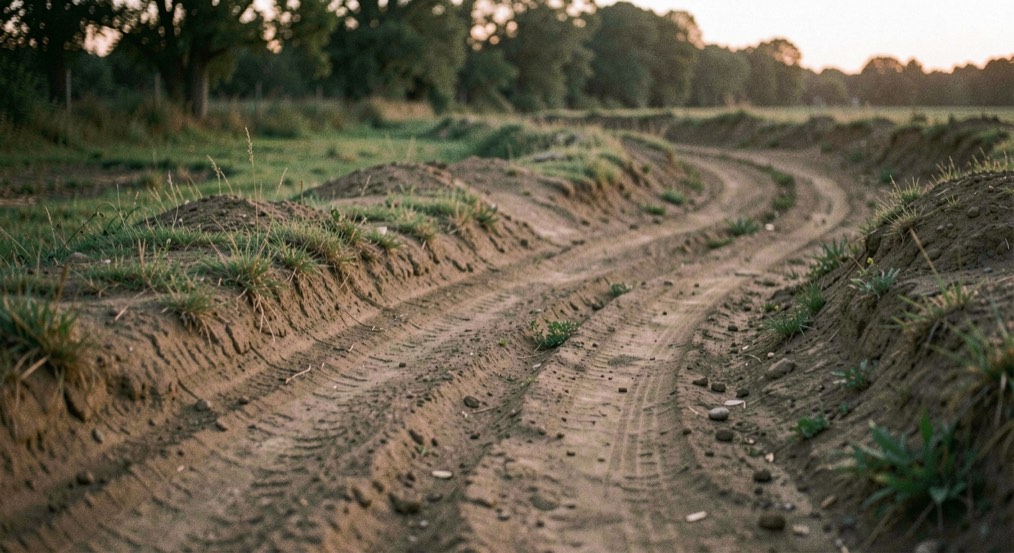
A rut is a corner that steers for the rider until the moment it does not. The working part is the driven line where soil compacted under repeated load; the loose edge and the thrown spoil beside it are decoration that can still grab a wheel. Reading a rut means naming which wall is load-bearing, where the bottom hardens or holds water, and where the rut exits onto ground that no longer guides anything.
A berm is a wall of dirt asked to do the job of banking. The banking relation is unforgiving: the faster and flatter the intended turn, the more lean the berm must supply, and the part it cannot supply arrives at the tires as extra load. Berms wear at the lip first because that is where the last and hardest contact happens. A berm read at its lip tells you the speed its users actually carried, not the speed it was built for.
Whoops are a frequency, not a row of bumps
Whoops look like obstacles and behave like a vibration problem. Spacing times speed sets the input frequency; the suspension either absorbs at that frequency or starts packing and hands the rider the bill. Deepening whoops are a signature of wheels spinning in phase, each pass throwing material into the next trough. From the fence, count spacing in paces and read the dust line to see whether the set is still growing.
Water edits every shape on the track. A light pass binds dust and resets grip; a heavy pass floods the low line and pumps the next braking zone soft. Reading a watered track means noting where the sheet stopped, which ruts still hold standing water and which berms dried at the lip while staying wet underneath. The maintenance answer follows the same reading: groom the shape, water the timing, and let the evidence set the line rather than the habit.
Maintenance is a second reading
A groomed track is a shape rewritten on purpose, so the maintenance log belongs beside the riding log. Record which ruts were filled, which berm lips were rebuilt and where the water truck actually stopped, because the next session will test exactly those repairs. A rut that returns in the same place after one week is a drainage answer, not a riding habit, and it should be read that way.
The order of work follows the same read-first rule. Fix drainage before shape, shape before surface, surface last; a berm rebuilt on top of a standing-water line is a repair scheduled to fail. Where whoops are growing, the useful entry is the spacing trend rather than the complaint: whether each pass is throwing material forward into the next trough, and whether a different entry speed flattens the pattern before the shovel does.
Some shapes are left alone on purpose. A rut that drains, a berm that holds its line and a whoop section kept for training are features until the log says otherwise. The fence-side habit is to name which shapes are being maintained, which are being tolerated and which are being read for the next rebuild, so the shovel answers a decision instead of a mood.
Season changes reset the whole reading. Frost heaves the compacted line, spring melt rewrites drainage and a summer of dust hides depth that was obvious in winter. The log that survives those resets is the one written per visit, dated and compared, because a track remembered is a track imagined. The same rule holds on water: the observation that counts is the one recorded before the next change arrives.
BOUNDARY
Reading a shape is not permission to ride it
A surface note does not certify a jump, a rut or a berm for a given bike, rider or hour of the day. Weather, machinery, protective gear and skill set the real limit; anything ambiguous is walked first, tested slowly and rechecked after water or machinery changes it.
The read-first habit is the same on water
The same discipline drives the wind reading note, where conditions are read before plans; the wear diagnostic sorts surfaces by symptom the way a track walk sorts shapes; and the tuning baseline insists on observation before adjustment.
SOURCES AND DATE
Checked 14 September 2026. Shared track vocabulary follows the published motocross reference; the reading order is desk practice, not course approval.