SHORT ANSWER
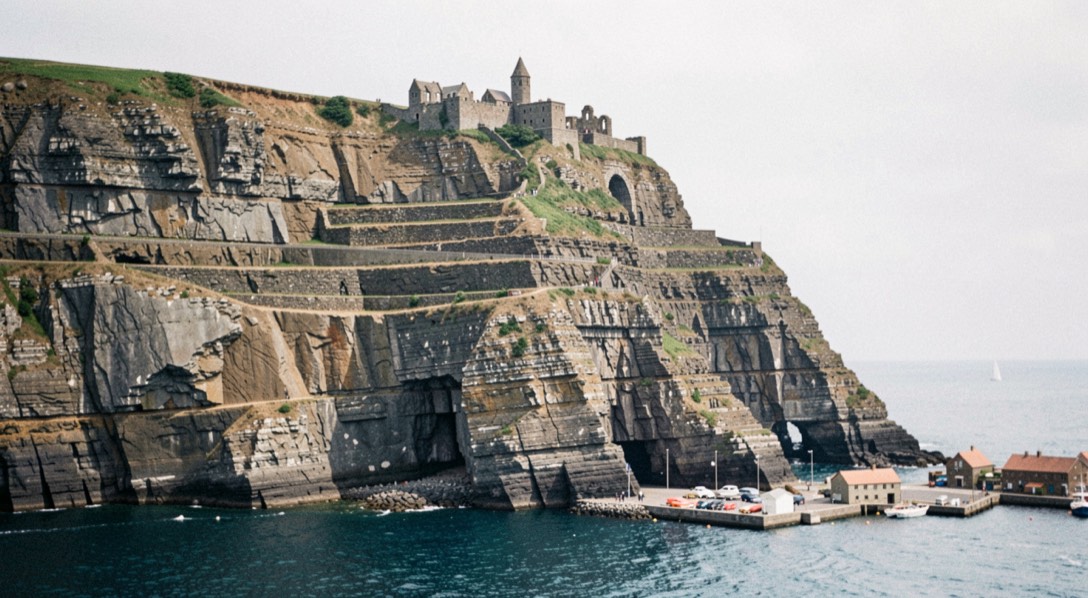
Read the shore in layers. The alum trade quarried and burned shale into a chemical works whose terraces still step down the hillside. Whitby jet turned fossil wood into mourning jewellery. The abbey on the headland outlasted monastery, synod and dissolution to remain a seamark. Behind the beach, Mulgrave Woods hold two becks and a castle ruin. At the table, the kipper and the fish supper outlived the fleets that fed them.
The layered version of this shore is kept at a notebook of the same coast, where alum works, jet, the abbey, the paths and the table each carry a dated note.
Three checks before you act
- 01Read the geology before the industry; the trades followed the shale.
- 02Walk the stair and the cliff path before judging the villages.
- 03Order the smoked fish; the table is part of the record.
Alum and jet: the trades that cut the cliff
Alum fixed dye for the cloth trade, and this coast supplied it by turning the cliff into a works. Shale was quarried, burned in heaps for months, steeped, boiled and crystallized, and the stepped spoil terraces north of Sandsend are the process written in ground. Read them as a plant rather than a landscape: each terrace is a stage of the recipe left where it happened.
Jet is the same cliff yielding a different material: fossilized wood, light enough to carve and black enough to polish, that became the Victorian industry of mourning jewellery. The seam mattered because it could be worked small; the trade mattered because a court fashion turned a beach material into a workshop staple. What remains is the seam, the memory of the workshops and the odd worked piece that still turns up after a cliff fall.
Abbey, stair and the wood behind the beach
Whitby Abbey holds the headland as a double monastery that hosted the synod that settled a calendar, a dissolution that unroofed it, and a ruin that still works as a seamark for the harbour below. The church stair climbing to it is the measurement every visitor takes on foot: a long flight whose count is part of the visit, and whose landings frame the harbour differently at each height.
Behind Sandsend the ground turns inward to Mulgrave Woods, an estate valley where two becks meet under broadleaf cover, with a castle ruin and walking access that is granted on set days rather than assumed. The contrast is the lesson of the coast: the front belongs to sea and trade, the interior to estate and wood, and the path between them is the only way the two halves read as one place.
Kippers and fish and chips: the table as archive
A kipper is not a species and not a recipe; it is a method. The herring is split, brined, hung and cold-smoked until the fish keeps, and the smokehouses that made the port's name still sell the result of the same four verbs. Ordering one is eating the preservation technique that let a perishable catch travel inland before refrigeration existed.
Fish and chips joined two older habits: fried fish from one tradition, chipped potatoes from another, combined in the nineteenth century and carried inland by the same railways that rebuilt this coast for visitors. On this shore the dish is not a takeaway cliche but the surviving end of a fishing economy. Read the menu the way the cliff is read: what is still made here, and what only remembers being made here.
One day, in the order the coast was built
The practical route follows the record itself. Start high, at the abbey and the church stair, where the seamark still does its original job of fixing the harbour below; then descend through the town the stair was built to serve. The alum terraces and the jet story belong to the cliff edge, so they read best from the shore path, where the worked ground is still legible in steps and scars.
The wood behind the beach is the inward half of the same day, and its access rules are part of the reading: an estate valley opened on set days rather than a public shore. Check the day's permission before counting on the path, carry the tide time for any beach section and treat the stair count as an excuse for stopping to look back at the harbour rather than a fitness test.
End at the table, because the smokehouse and the fish supper are the coast's living archive rather than its dessert course. A kipper ordered where the method still runs closes the loop that the alum terraces open: the shore fed industries, and two of them can still be tasted. The notebook entry that matters is which parts are still made and which parts only remain.
Weather decides how much of the record is readable on a given day. Flat light shows the terraces' relief better than hard sun, a low tide opens the beach sections the cliff path cannot reach, and wind on the headland shortens any linger at the abbey wall. The visit is planned the way a passage is planned: the fixed points first, the exposed sections with a margin, and the table kept as the sheltered end of the day. The written route is worth keeping afterward, because the coast changes and the next visit starts from the last honest record rather than from memory.
BOUNDARY
A notebook is not a tide table
Access rules, opening days, estate restrictions and safe behaviour near cliff edges change with season and weather. Check current conditions, tide times and posted limits before walking the shore, the stair or the woods.
Coast reading uses the same log discipline
The habit transfers directly: read the conditions before choosing, then record wear on the return with the wear diagnostic, and remember that salt water hides damage at interfaces the way the crevice corrosion note records at fittings.
SOURCES AND DATE
Checked 14 September 2026. Abbey history and access context follow the official heritage record; the trade and table readings are desk synthesis.