SHORT ANSWER
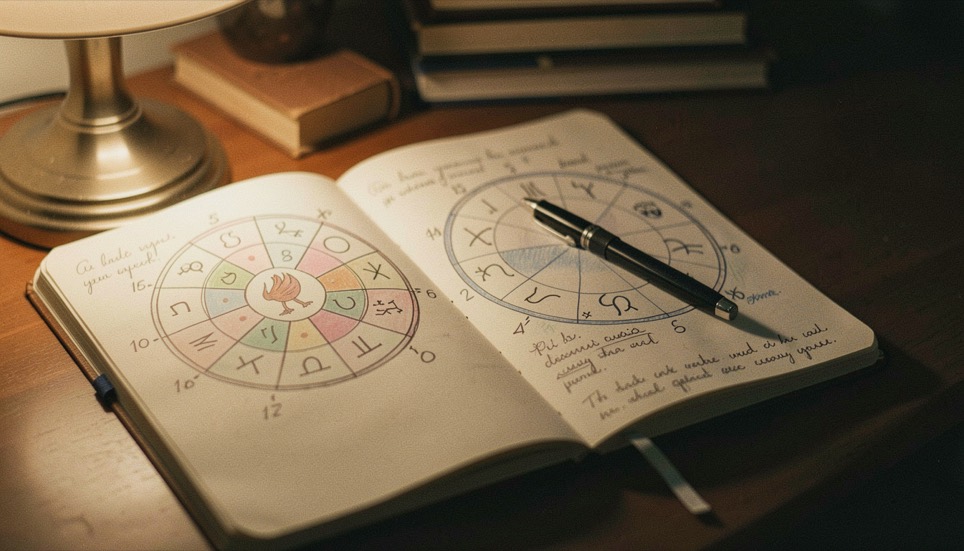
The grid gives every sign an element and a temperament. Aries reads as the initiator in love: direct, fast, impatient. Compatibility tables pair elements that are supposed to flow or fight. Money notes turn sign traits into budget habits. Used honestly, the grid is a vocabulary for conversations rather than a measurement of two people; the check that counts is behavioral, meaning what the relationship or the budget actually does.
A Turkish journal keeps this calendar season by season at a sign-season diary, where compatibility, budgets and the table sit under the same sky grid.
Three checks before you act
- 01Treat the sign grid as vocabulary, never as evidence.
- 02Let the budget line outvote the horoscope.
- 03Record where the symbol opened a real conversation; that is its working part.
The Aries figure in love
In the traditional grid Aries is the first fire sign, cardinal and ruled by Mars, and its love figure is drawn as the one who moves first. The archetype pursues directly, reads hesitation as a refusal and treats the start of a relationship as the part that matters. The figure is useful precisely because it is exaggerated: it names a recognizable tempo of courtship rather than diagnosing a person.
Read the figure as a prompt about pacing. The Aries pattern front-loads intensity and then has to learn maintenance, which is the same failure any strong start shows over a long campaign. The tradition itself keeps the limit visible: a birth chart places the sun in Aries, but the moon, the ascendant and the rest of the wheel are supposed to qualify it, which is the system admitting that one variable is never the whole record.
Compatibility as a grid, not a verdict
Sun-sign compatibility is a pairing table over four elements and three modes: fire with air is said to accelerate, earth with water to consolidate, and same-element pairs to amplify for better and worse. The machinery is elegant because it is a grid; twelve signs reduce to a handful of relations and any pairing reads in one line. That is also its limit, because a table that answers everything has measured nothing.
The more careful tradition agrees. Synastry, the comparison of whole charts, exists because the sun-sign table was always too coarse for a marriage question. The measured checks that exist on compatibility point elsewhere entirely: shared logistics, repair after conflict, money habits kept visible. The useful move is to let the grid open the conversation and let the record finish it, in that order and never reversed.
Signs and the budget
In the classical scheme, money sits in named houses and each sign carries a spending script: the impulsive sign that buys the tool before the plan, the hoarding sign that cannot replace the worn rope, the social sign whose budget leaks into dinners. The scripts are stereotypes, but they are stereotypes about behavior, which means each one can be converted into a single observable habit.
That conversion is the honest way to use the grid at the table. Take the sign's predicted failure, write it as one line in a ledger and check the month against it: did the impulse purchases cluster where the script said they would? If yes, the symbol earned a budget rule; if no, the record corrected a story. Either way the notebook did the work, which is all this desk ever claims for a framework.
Run the grid like an experiment
The honest way to keep a zodiac habit is to give it the same trial a budget gets. Pick one prediction the grid actually makes, whether an impulse line, a compatibility friction or a spending script, write it as a single checkable line and let the month vote. A symbol that survives three months of records has earned a rule; a symbol that keeps failing has still done its job, which was to start the conversation.
For couples, the grid works best as a shared vocabulary rather than a verdict. Naming a temper by sign lets two people discuss pacing and friction without scoring each other's character; the table stays a third party both can blame. The boundary is the same one this desk keeps everywhere: the symbol may open the talk, and the record of what each person actually does is what closes it.
Keep the money side literal. A sign's spending script becomes a ledger category, gifts, impulse tools, dinners, and the review is the ordinary monthly one rather than a reading. Where the grid predicted the leak correctly, keep the rule it suggested; where it missed, the record corrected a story at no cost. That is all a framework owes a household.
The experiment has one rule that protects it: the grid never gets to forecast after the fact. A prediction is written before the month begins or it does not count, because a symbol flexible enough to explain anything that happened explains nothing in advance. The same discipline separates a forecast from a story at sea, and it is what keeps a pleasant framework honest when it sits at a real table with real money. The grid may stay on the kitchen wall afterward; it has simply been demoted from oracle to prompt, which is the honest job it was always fit for. What remains after the demotion is the part worth keeping: a shared language for talking about temperament, timing and spending without turning any of it into fate.
BOUNDARY
A symbol is not a decision
Compatibility grids and money readings are tradition, not measurement. Relationship and financial decisions deserve records, honest conversation and qualified advice where the stakes are real; the grid may open the talk but it never closes it.
Pattern reading has stricter cousins on the water
The difference between a grid and an observation is the whole point of reading the actual wind, the decision matrix that keeps variables separate, and the inspection note that starts from evidence rather than expectation.
SOURCES AND DATE
Checked 14 September 2026. The astrology reference supplies the measured status of the tradition; the reading frame is desk synthesis.