SHORT ANSWER
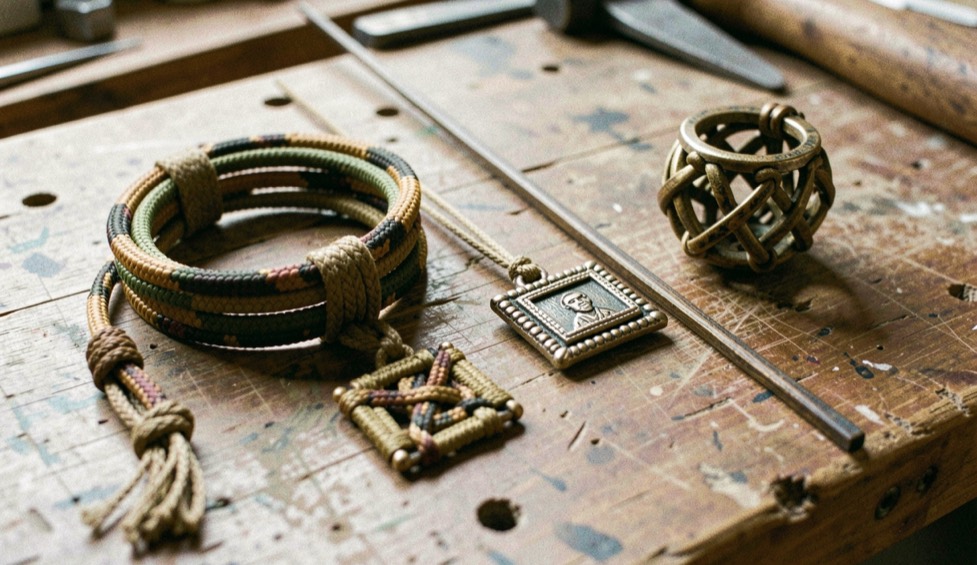
The cobra bracelet teaches the two alternating loops behind most flat weaves. The fishtail and survival bracelets rearrange the same cord into thinner and bulkier results. Square-knot keychains and the monkey fist build structure in the round, a lanyard adds a clip, and a wide dog collar turns the weave into working gear. Every project teaches the same habits: consistent tension, honest measuring and ends finished so they cannot creep loose.
For each weave photographed knot by knot, the paracord project guides cover the same bracelets, keychains and field pieces in the order a first-timer can follow.
Three checks before you act
- 01Measure the wrist, ring or collar hardware before cutting cord.
- 02Keep every pass at the same tension; uneven tension is the visible flaw.
- 03Finish ends so the join cannot slip: melt, tuck or seize as the project specifies.
Why the cobra bracelet comes first
The cobra stitch is two loops traded left and right over a core, and it hides every beginner lesson inside one bracelet. Sizing starts at the wrist measurement plus the knot bulk, not at a guess; the buckle sets the working length and each pass seats against the last with the same thumb pressure. The usual faults are all visible early: a spiral means the starting side was never alternated, slack loops mean the tension changed with the cord hand, and a short tail means the working ends were cut before the weave was counted.
Work the first bracelet in a single sitting with two cord colors so the loop direction stays obvious. Count the knots against the wrist rather than the clock, and leave the last two passes looser so the buckle pin can seat. Melted ends should be pressed flat, not pointed; a sharp cooled tip is the difference between a bracelet that gets worn and one that scratches. Record the cord type and the finished length in the notebook, because the second bracelet is where consistency is actually proven.
Flat weaves, then knots in the round
The fishtail reverses the exercise: two cords weave through each other around a core so the result is flatter and uses roughly half the cord of a cobra. The survival bracelet goes the other way, storing a long single cord in a quick-release weave so the whole piece unzips into usable line. Both remain tension drills; the fishtail punishes haste with skewed rows, and the survival weave punishes crowding with a lump that never sits flat.
Keychains move the same hands into the round. The square-knot fob is the old macrame habit: four strands, alternating flats, a firm pull on each. The monkey fist wraps three planes around a marble or ball-bearing core, a knot sailors used to weight a heaving line long before it held keys. The lanyard with a snap hook is a straight cobra spine finished on a clip, sized so the tool it carries lands where the hand expects it rather than where it happens to hang.
The wide dog collar is the load test
A collar multiplies everything: more cord, a stiff inner strap or webbing core, a welded ring and a buckle or side-release rated for the animal. The weave is the same alternating loop, but the stakes change because the piece now works under pull, mud and washing. Choose washable synthetic cord, keep the inside smooth enough not to rub, and measure the neck with the two-finger rule written beside the number.
Treat the finished collar like rigging, not jewelry. Check the hardware seats, run a hand over every melt point, and test the closure under a load applied by hand before the dog wears it. Wash it, dry it flat and re-check the fit after the first wet week, because woven cord settles. If a loop lifts or a ring gate thins, the piece comes off and the next one is built by measurement, not by feel.
Keep a bench log for every project
The difference between a first bracelet and a twentieth is a written record. Log the cord type, the color pair, the starting length, the finished length and the hardware used, because the next piece starts from the last numbers rather than from memory. A collar built for one dog transfers to the next only when the measurements transfer with it. Note the failures with the same care: which end crept loose, which melt point opened, which buckle sat crooked and under what use.
The log also fixes the shopping. Cord is sold by length and by type, and a project list priced from memory buys either too much or a second trip. A page that records how much a cobra bracelet takes beyond the wrist, how many short strands a square-knot fob needs and what a wide collar consumes in strap plus weave turns the next order into arithmetic instead of a guess.
Work the projects in the order the skills stack: keychain, bracelet, lanyard, survival weave, collar. Each adds one variable, whether scale, hardware or a new knot, and none requires unlearning the last. The sequence is the same one a loft uses for repairs, simple patch before shaped patch before corner rebuild, because hands learn tension before they learn judgment.
Retire pieces on evidence, the way worn running rigging is retired. A bracelet that has stretched beyond its knot count, a lanyard clip with a lazy gate or a collar whose inner strap shows abrasion has filed its own report. The log entry is short: what failed, where and after how much use. Three of those entries across a season of projects teach more about materials than any product description, and they make the next piece safer before it is woven.
BOUNDARY
Cord craft is not a safety system
Bracelet tension and collar fit are workshop tolerances, not load ratings. Nothing woven by hand belongs in climbing, towing or restraint under real load, and a dog collar still needs rated hardware, a fit check and routine inspection like any other piece of gear.
The same loop discipline serves the boat
Cord work is measured the way rigging is measured: the reefing hardware guide names every turning point, the measurement checklist fixes the endpoints before cutting, and the repair kit note keeps the tools that make clean finishes possible.
SOURCES AND DATE
Checked 14 September 2026. Cord construction and the 550 nomenclature follow the published parachute cord reference; project order and fault lists are desk practice.